
Visualizing Genre Shifts: Evidence from COVID-19
Pre-COVID: before 2020
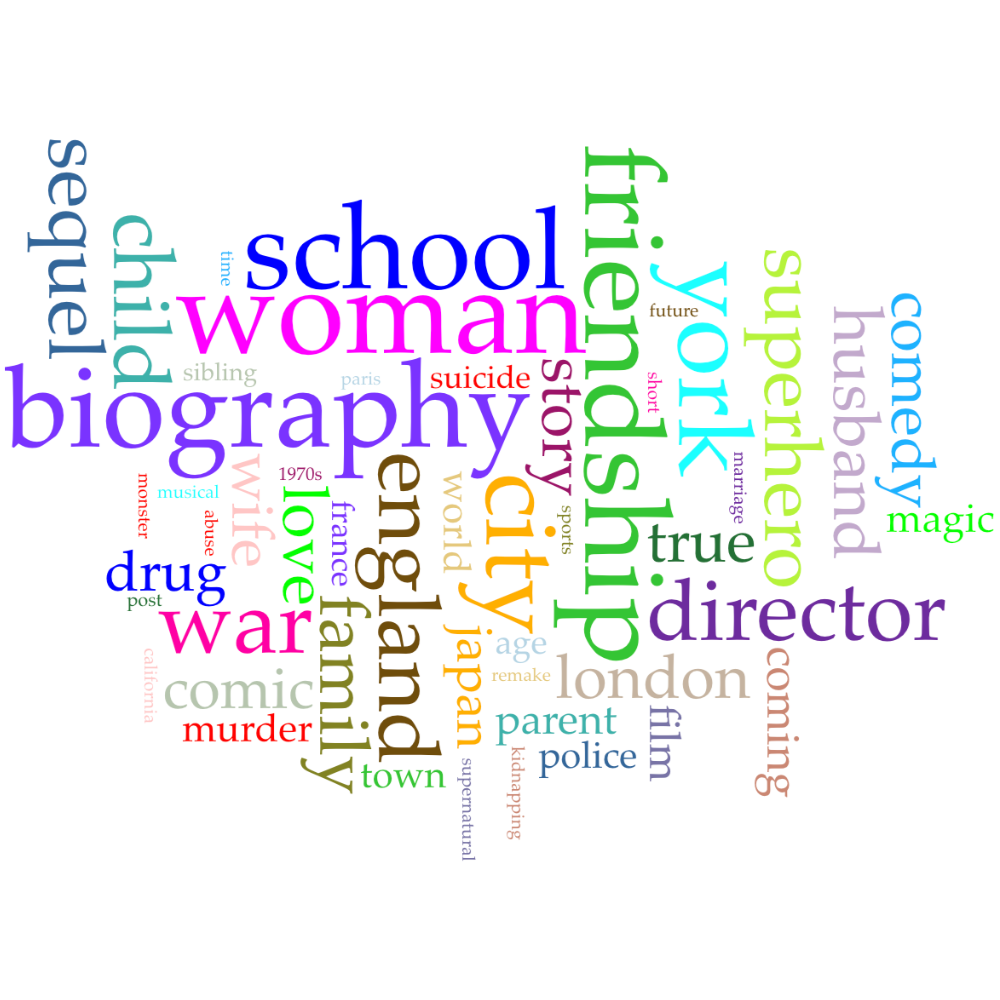
Dominant: biography, school, woman, friendship, city, director
During COVID: 2020 to 2021
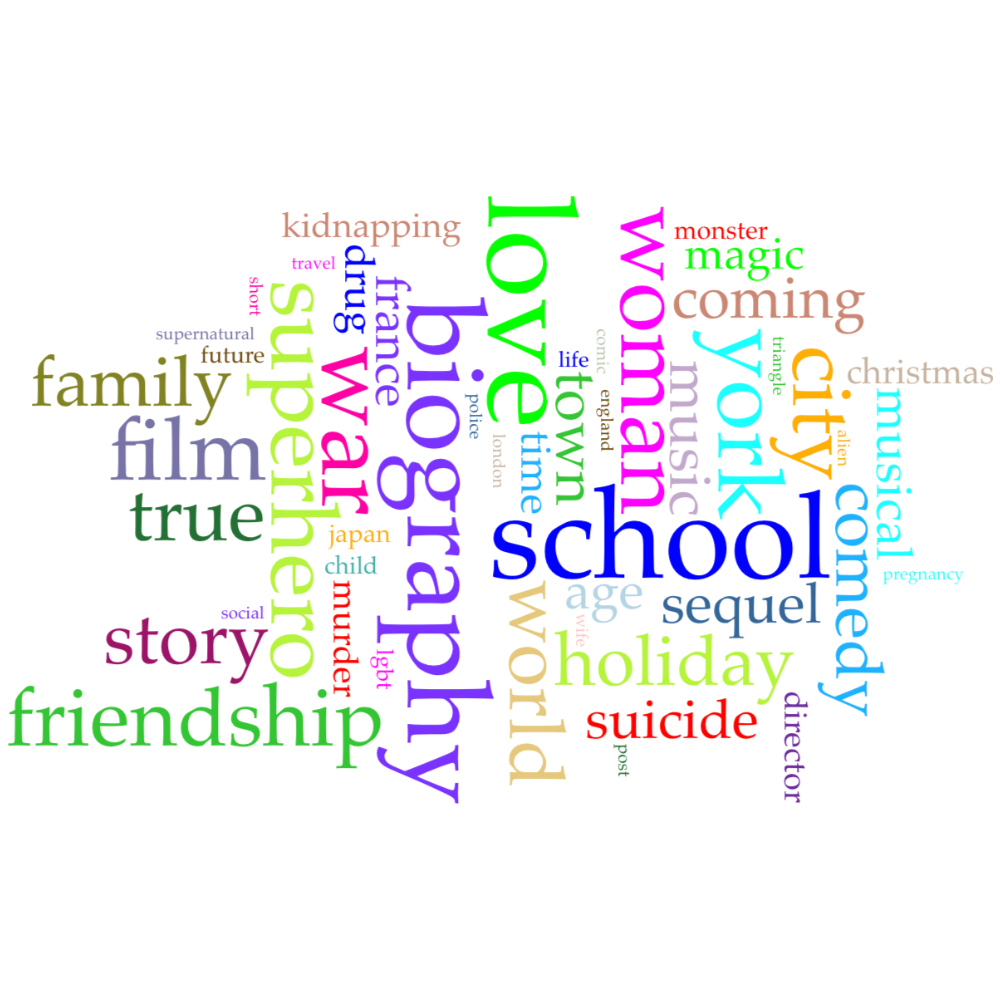
Dominant: biography, school, woman, love, war, superhero
Post-COVID: 2022 onwards
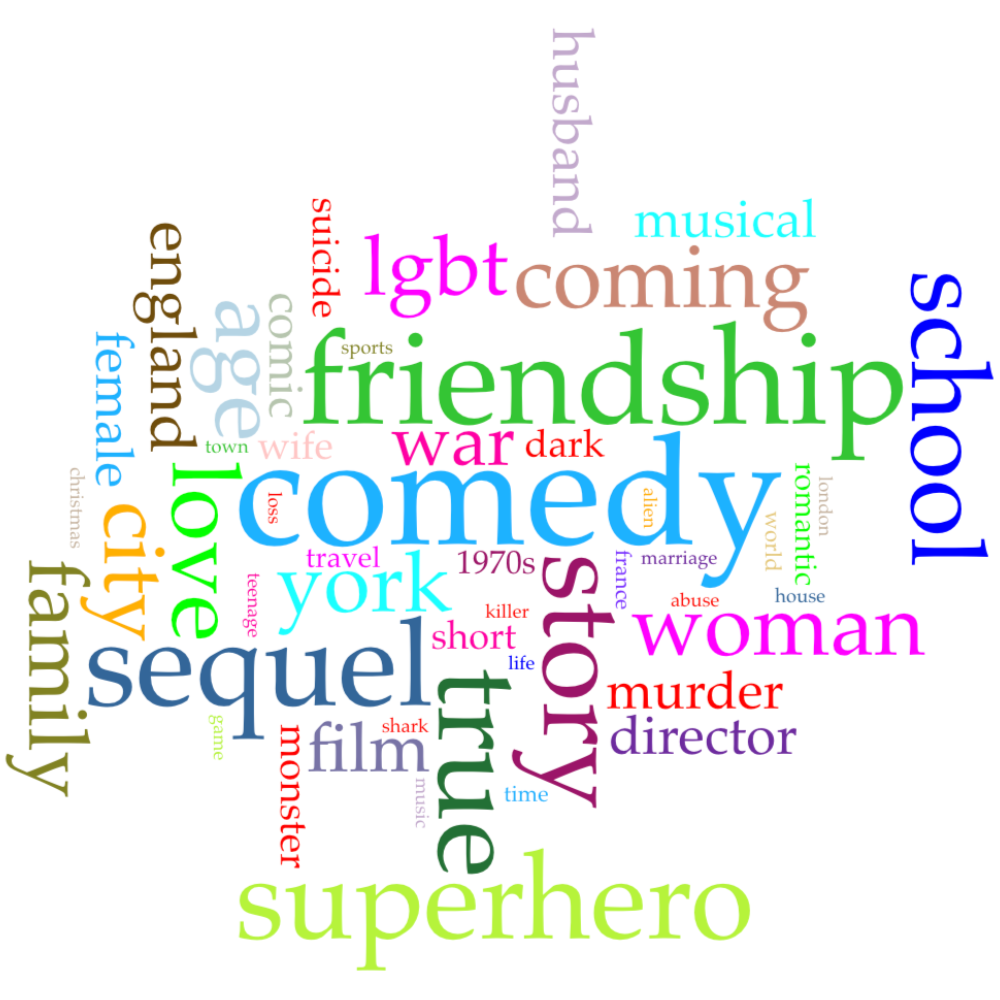
Dominant: comedy, superhero, friendship, love, school
The three wordclouds above map the most frequent keywords associated with films produced across three distinct periods: pre-COVID (2016-2019), during COVID (2020-2021), and post-COVID (2022-2025). Before the pandemic, dominant keywords such as biography, school, and friendship pointed toward grounded, reality-adjacent storytelling. As COVID-19 took hold, the keyword landscape became slightly divided. Superhero and love rose as one of the dominant terms while heavy themes like war, suicide, murder, and monster also gained more presence compared to the pre-COVID period, reflecting the simultaneous human need to process reality and escape reality, as Çalışkan (2022) identifies in Turkish Netflix viewership during the same period. By the post-COVID period, the balance shifted dramatically toward comedy, friendship, and superhero.
It is worth noting that because our dataset captures films by production date rather than audience consumption, these shifts reflect what filmmakers were creating in response to the cultural moment, and not necessarily what audiences were choosing to watch. This distinction matters, but does not weaken the broader point and only reinforces it. Genre rises and falls not only through audience demand but through the stories societies feel compelled to tell. The post-COVID turn toward lighter, community-oriented content suggests that filmmakers, like audiences, were responding to a shared need for recovery. Together, these patterns support the crisis-cinema literature’s broader claim that genre cycles are not random but reflections shaped by the emotional and social conditions of any given moment.